October AMM Comms: Election 2026 – What the Parties Are Proposing for Employers and Small Businesses

October AMM Comms: Election 2026 – What the Parties Are Proposing for Employers and Small Businesses
With the 2026 general election set for Saturday 7 November 2026, political parties have been releasing their policies ahead of polling day.
Below, we summarise the key party policies affecting employers and businesses, particularly small to medium-sized enterprises (SMEs) in New Zealand. A link to each party’s full policy is included at the end of each section.
This update covers policies released by National, Labour, ACT, the Green Party, NZ First, The Opportunity Party and Te Pāti Māori. While each party takes a different approach, several common themes emerge, including:
- changes to employment law and the employment dispute process;
- the minimum wage, training wages and support for apprentices;
- tax changes for small businesses, including company tax rates, GST registration and claiming the cost of equipment; and
- opportunities for businesses to win government contracts and reducing business compliance costs.
The policies summarised are proposals only. Whether any of them are implemented will depend on the election result and any coalition negotiations that follow. This update is a neutral summary for information purposes and does not endorse any party or policy.
National Party: 47-point plan to support Small Businesses in New Zealand
The National Party has developed a 47-point plan built around the reality of running a small business. It proposes to make changes for small businesses that result in less time navigating government, more confidence to employ someone, more room to invest and grow, and more opportunities to sell to customers here and around the world.
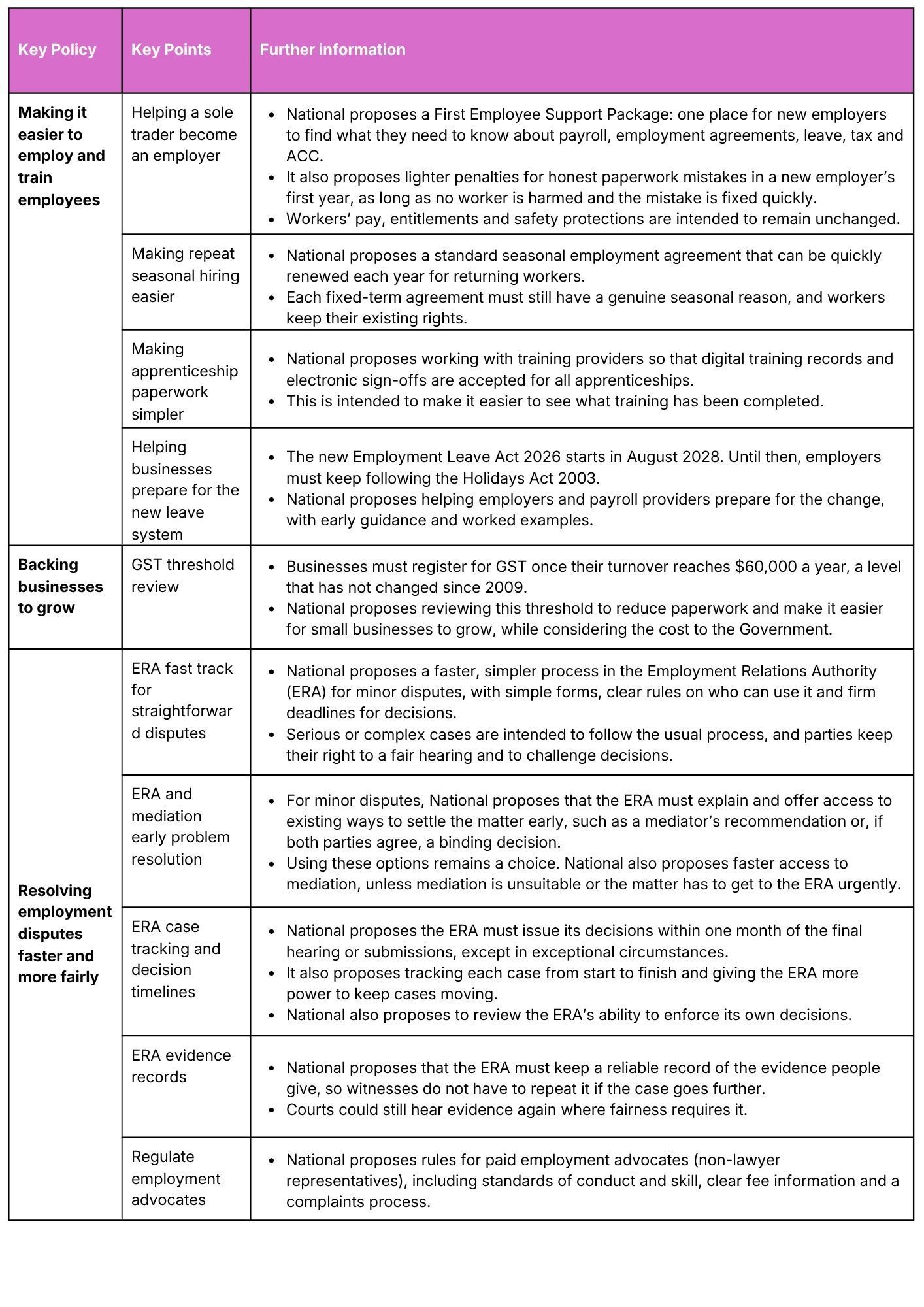
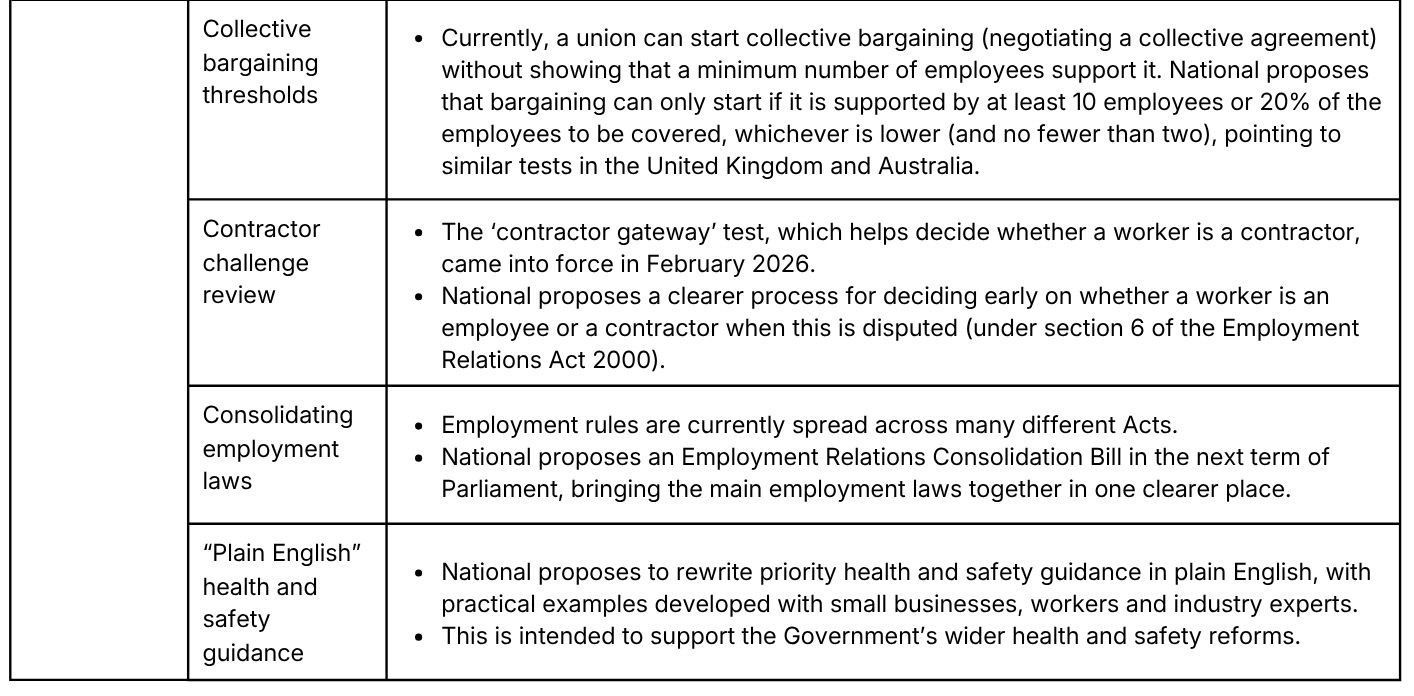
You can read more about National’s plan to support small businesses here: National’s plan to support Small Businesses | National Party
Labour Party: Small Business Action Plan and Small Business First Policy
Labour’s Small Business Action Plan focuses on improving cash flow, cutting the cost of paperwork and red tape, and helping small firms invest and grow. The plan forms part of a wider small business package that also includes Labour’s Small Business First initiatives.
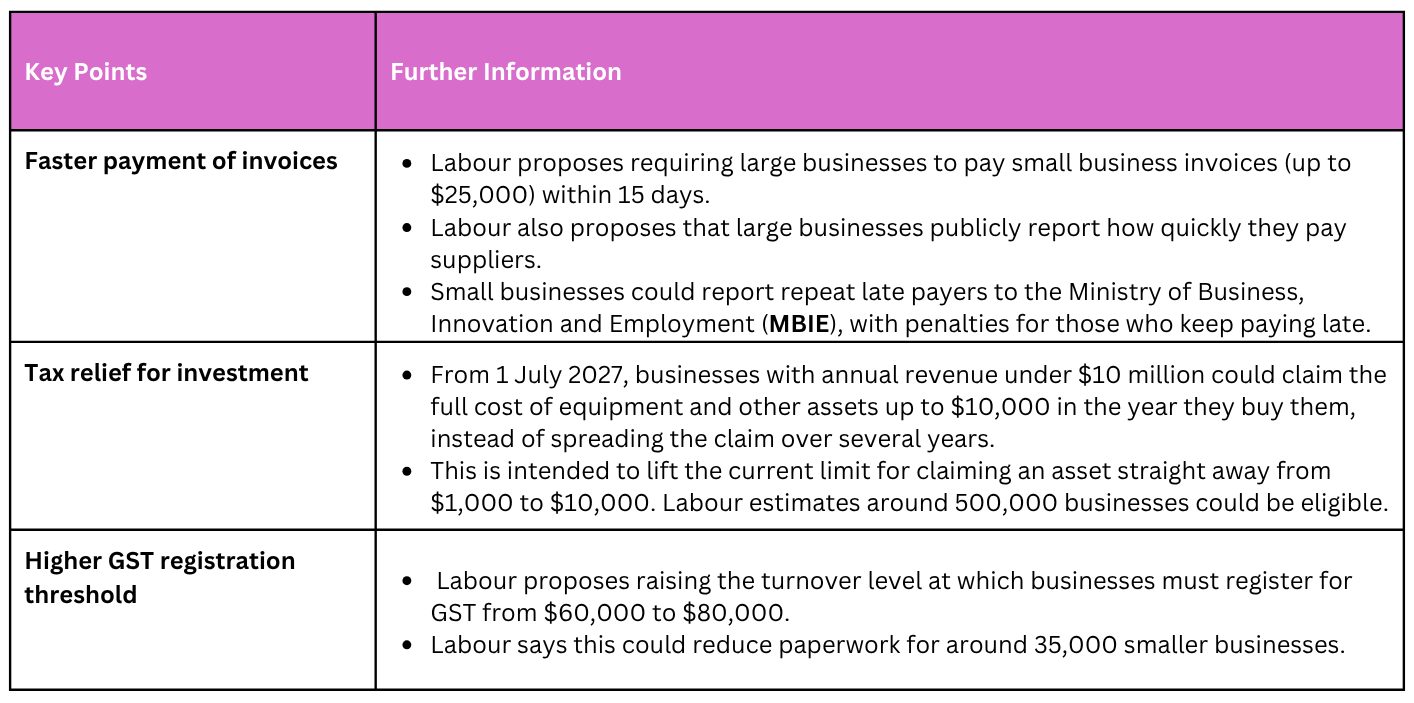
You can read more about Labour’s Small Business Action Plan here: Labour's Small Business Action Plan
Small Business First Policy
Labour's Small Business Action Plan intends to help business owners get paid sooner, invest in what they need and cut paperwork. Labour proposes that the next step is to put small businesses first when government contracts are awarded, information is collected, and new rules are made.
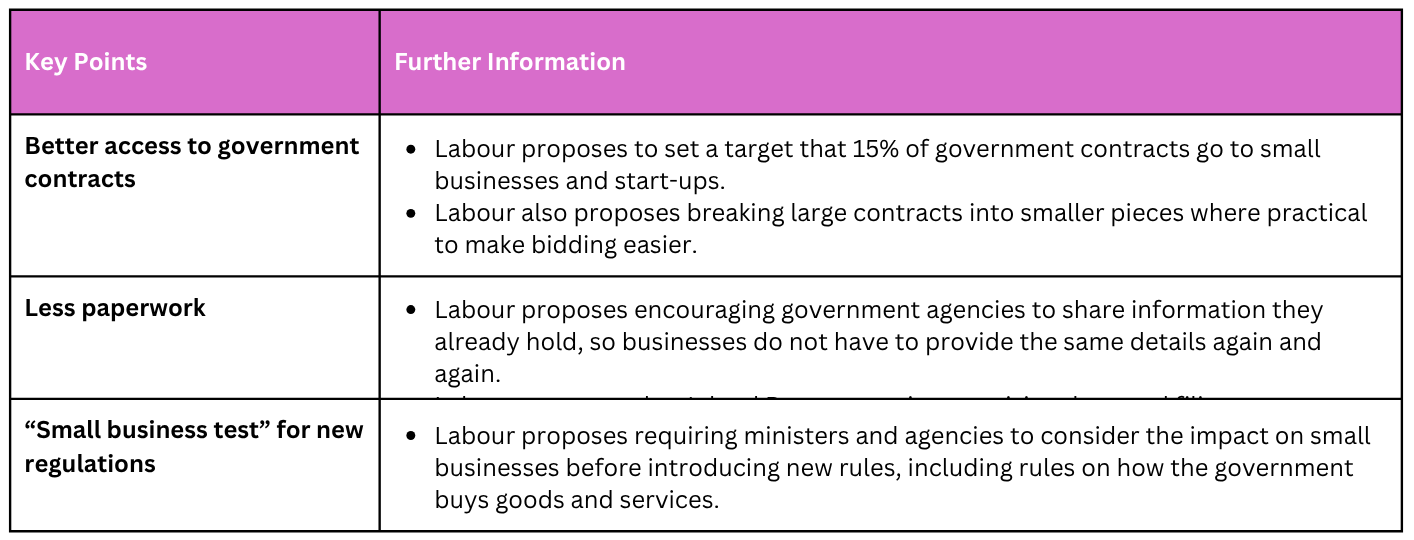
You can read more about Labour’s Small Business First Policy here: Labour's Small Business Action Plan
ACT Party: ‘Let small business get on with business’
On 15 September 2026, the ACT party announced its policy ‘Let small business get on with business’. ACT proposes to lower the cost and risk of employing people, make employment law simpler and fairer, and modernise tax rules so small businesses can hire, invest, and grow.
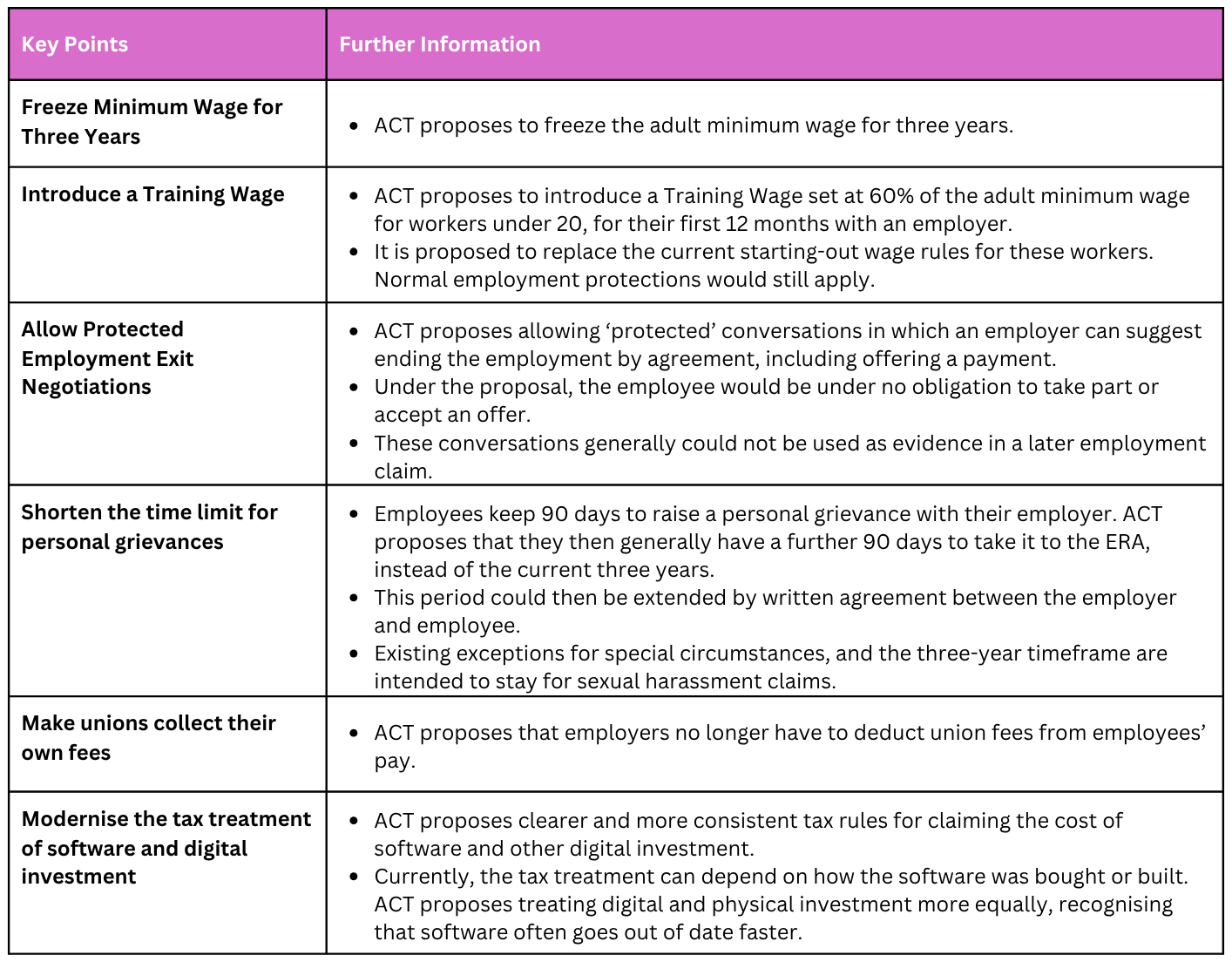
You can read more about ACT’s Let small business get on with business Policy here: ACT New Zealand
Green Party: ‘Good Jobs for All of Us’
On 17 October 2026, the Green Party announced its intention to abolish the training wage and provide more support for apprentices. This is the final component of its jobs package, ‘Good Jobs for All of Us’.
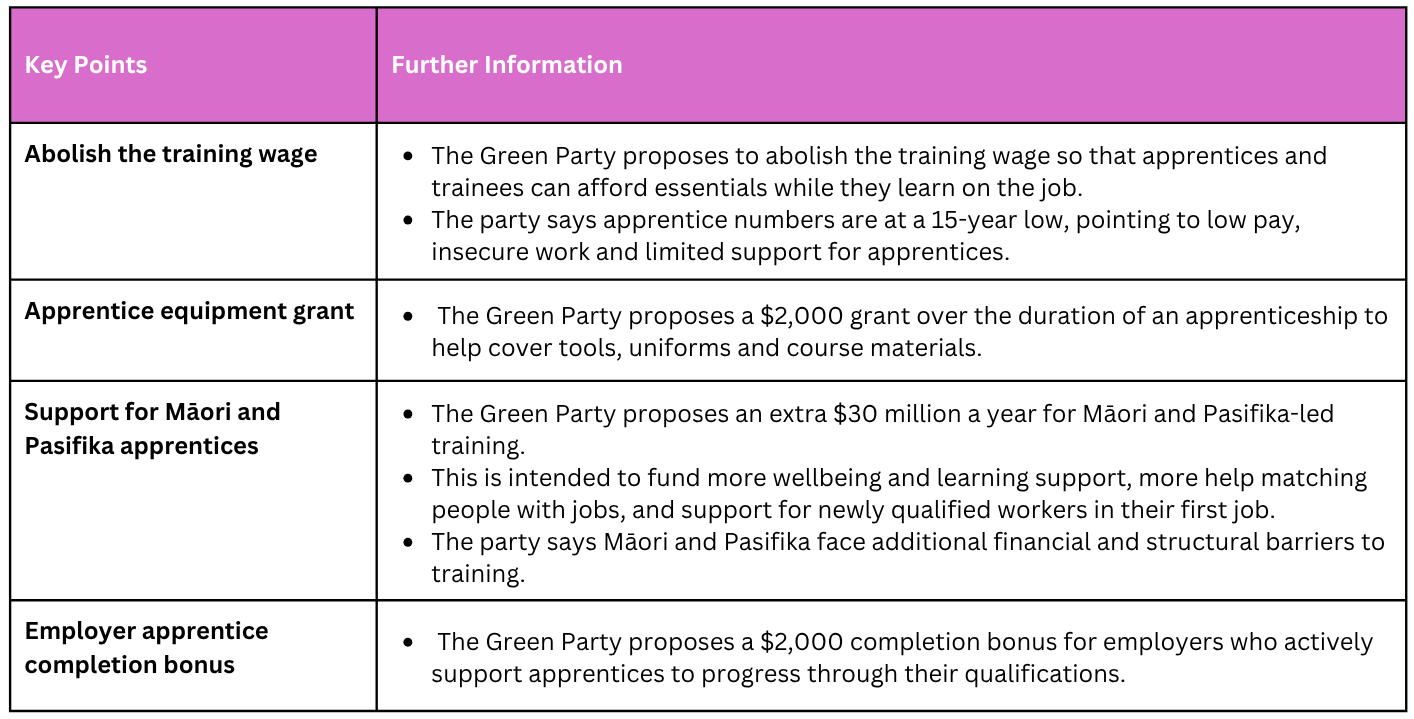
You can read more about Green’s ‘Good Jobs for All of Us’ Policy here: Good Jobs For All of Us - Green Party of Aotearoa New Zealand
NZ First: ‘Lowering Tax Rate for SMEs to 20%’ and ‘Increase Working for Families, Minimum Wage’
‘Lowering Tax Rate for SMEs to 20%’
NZ First has announced it will campaign on lowering the company tax rate for small and medium-sized enterprises (SMEs).

You can read more about NZ First’s Lowering Tax Rate for SME’s Policy here: Lowering Tax Rate for SMEs to 20% - New Zealand First
‘Increase Working for Families, Minimum Wage’
NZ First has also announced it will campaign on annual minimum wage increases and a higher Working for Families in-work tax credit, linking the policy to cost-of-living pressures on low-wage workers and families.
We have summarised some of the key points below:
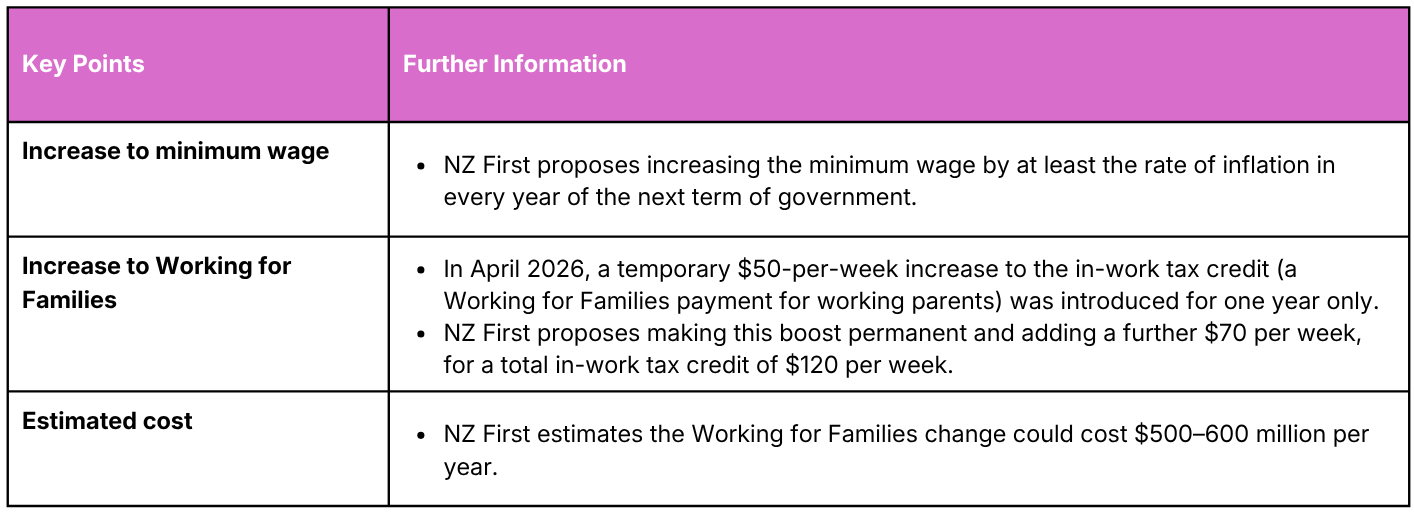
You can read more about NZ First’s Increase Working for Families, Minimum Wage Policy here: Increasing Working for Families and Minimum Wage - New Zealand First
Opportunity Party: ‘Breakthrough Economy Policy’
The Opportunity Party’s ‘Breakthrough Economy Policy’ aims to grow New Zealand’s economy through high-skill sectors such as research, software and high-tech manufacturing. The party points to a 35% gap in economic output per person between New Zealand and Australia.
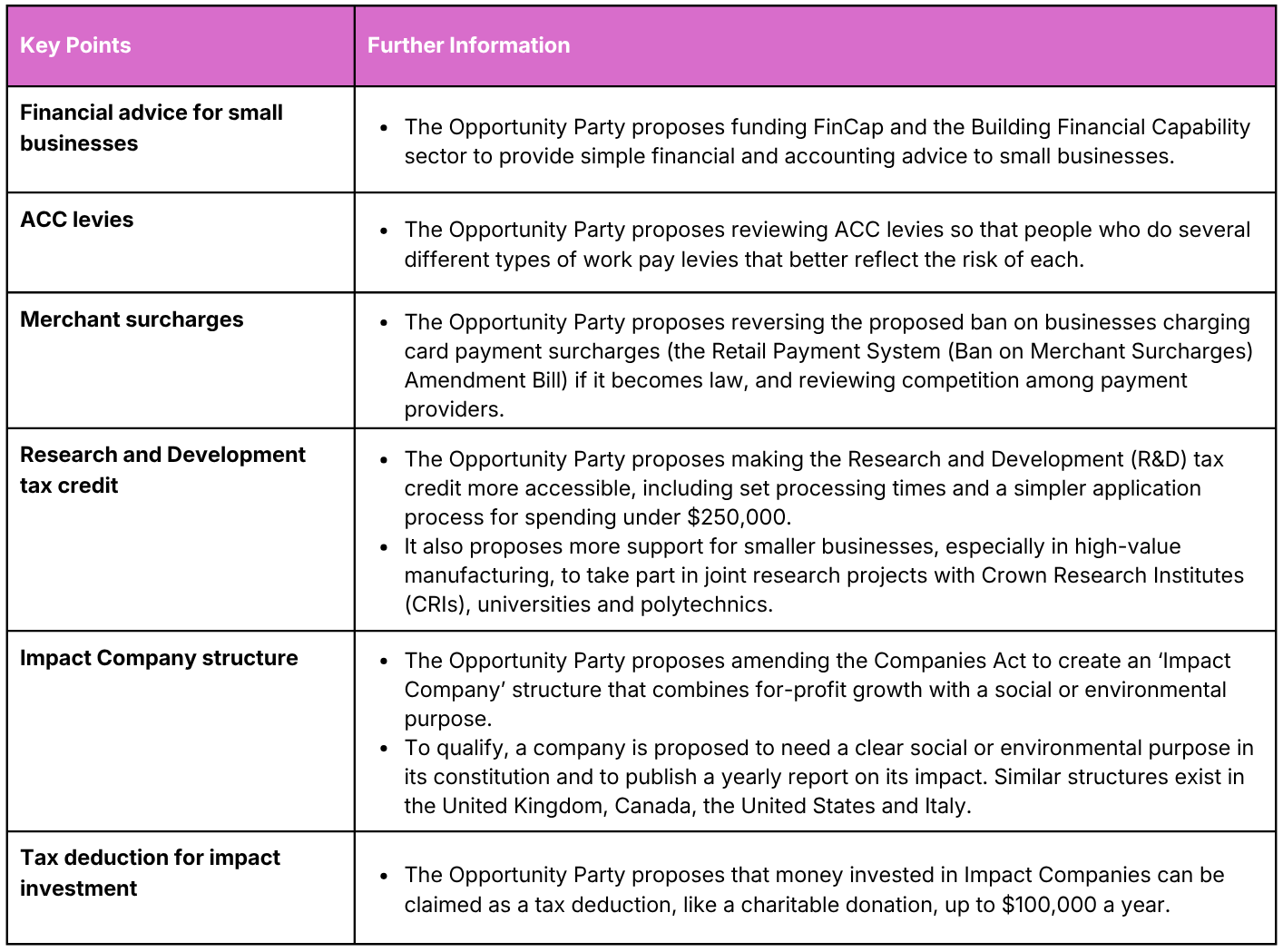
You can read more about the Opportunity Party’s Breakthrough Economy Policy here: Breakthrough Economy - The Opportunity Party
Te Pāti Māori (Māori Party): Economic Development Policy
Te Pāti Māori’s Economic Development policy, part of its 2026 Policy Manifesto, aims to enable Māori economic self-determination (tino rangatiratanga), grounded in Te Tiriti o Waitangi. The party notes that the Māori economy has grown from $20 billion to $125 billion over the past two decades.
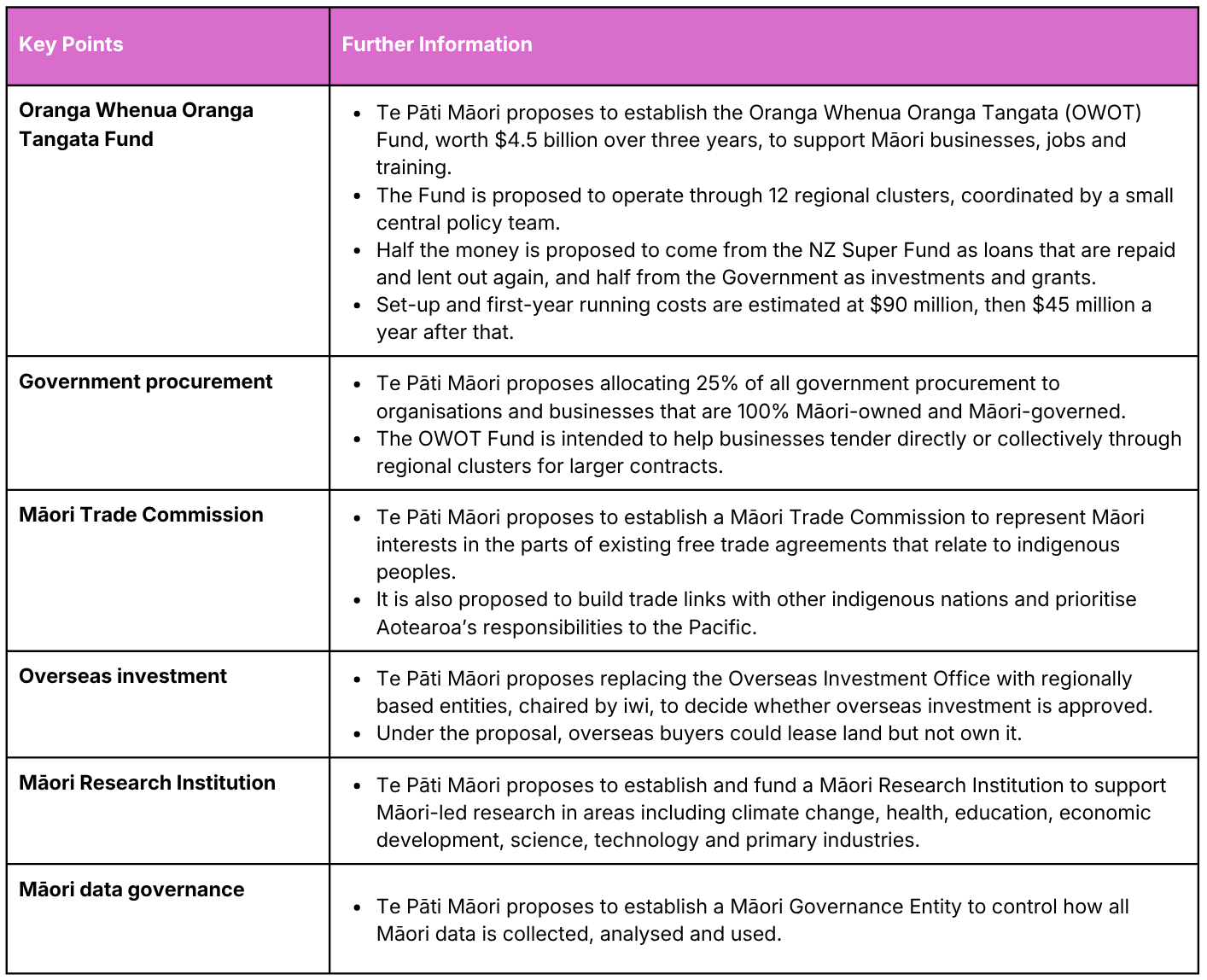
You can read more about Māori Party’s Economic Development Policy here: Economic development - Te Pāti Māori
How we can help
It can take time for new policies to be developed, consulted on and passed into law, and it is too early to know which of these proposals will proceed, given that this will depend on who is elected.
We will continue to monitor policy announcements following the election and keep you informed of any developments that may affect your business.
We remind you of our articles covering employment law changes in 2025:
Devil is in the Detail - Holidays Act Reform
Workplace Law 101: What Employers need to know in 2026
Employment Leave Bill: Summary of Select Committee Amendments
Privacy Act Amendment: New Indirect Collection Obligations from 1 May 2026
Employment Relations Amendment Act 2025
Our team can assist with helping you understand any recent employment law changes, educate your employees on the changes, assist with your leave compliance, including updating employment agreements and policies, as well as assisting with employee communications around the changes once they are implemented.
Disclaimer: We remind you that while this article provides commentary on employment law, health and safety and immigration topics, it should not be used as a substitute for legal or professional advice for specific situations. Please seek legal advice from your lawyer for any questions specific to your workplace.